By Dr. Michele Yatchmeneff
Chief Operating Officer, Alaska Native Science & Engineering Program
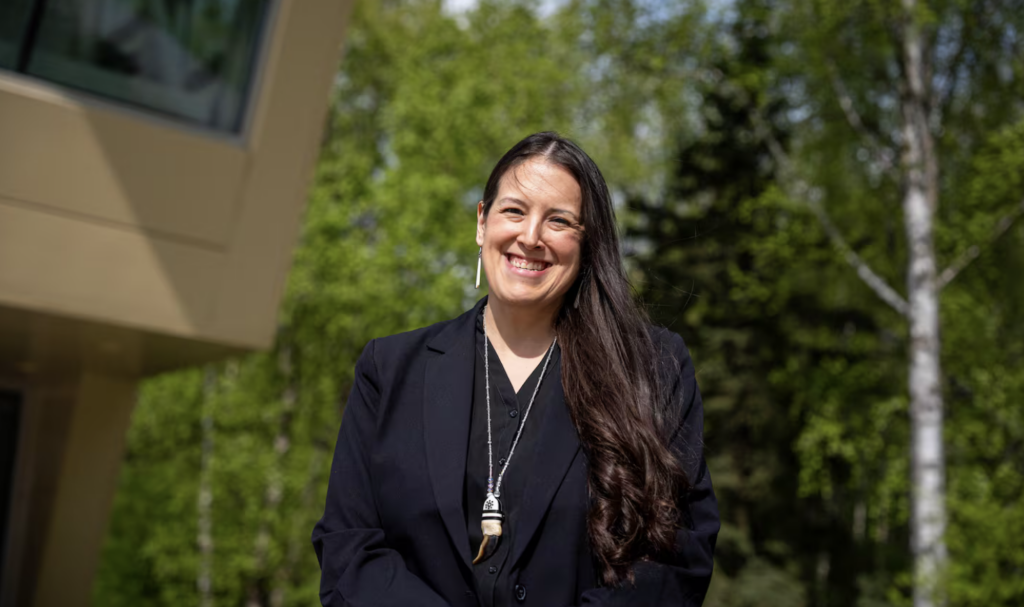
As we head into the new school year, I have a full year of perspective under my belt as the Chief Operating Officer at the Alaska Native Science & Engineering Program. As an ANSEP alum myself, it has been a meaningful return for me, both personally and professionally. Student by student, community by community, ANSEP is expanding to offer new opportunities to students every year. And as ANSEP’s original home-grown Ph.D. student and the first Alaska Native with a doctorate in engineering education, I know I serve as an example of how supporting one student can impact thousands of students and community members.
My own experiences shape how I think about student success. We often focus on outcomes such as grades, credits, and degrees. Those measures are important, but they do not tell the entire story. Success also depends on whether students develop a sense of belonging, learn to seek help, understand how to navigate academic systems and begin to view themselves as capable college students and professionals.
ANSEP’s work is designed around that broader understanding. Our sequential model begins in kindergarten and continues through middle school, high school, undergraduate education, and graduate study. The purpose is not simply to expose students to science, technology, engineering, and mathematics. It is to provide sustained academic preparation, clear expectations, and a community of peers and mentors who reinforce the belief that students can succeed in demanding fields.
What connects every component of the program, from kindergarten through doctoral programs, is intentional preparation. Students benefit when academic rigor is paired with practical support and when opportunities to advance their education are offered early enough to influence how they understand their own potential.
During the past year, I watched students make progress at every point along that pathway. Younger students strengthened their mathematics and science foundations through hands-on learning like gummy bear engineering and K’Nex bridge building. High school students completed university-level coursework and learned to communicate with professors. University students continued toward degrees while gaining research, internship, and professional experience.
One of the clearest examples of how ANSEP offers transformational change for students was the expansion of a full-time Acceleration Academy in Nome. The program opened last fall with 11 Nome-Beltz students following advocacy from local families and community members who wanted college preparation and cost-savings opportunities available closer to home.
In its first year, this cohort, just shy of a dozen students, completed 252 University of Alaska credits in prerequisite and higher-level courses. By spring, five students were carrying enough credits to be considered full-time university students while still enrolled in high school. They also participated in field research, earned certifications, worked to produce and present films at Nome’s Alappaa Film Festival, and contributed to their community by preparing and delivering dinners to the Nome Emergency Shelter Team (NEST) to help feed those facing food insecurity.
The credit total is impressive, but I am equally interested in the developmental progress behind it. Students learned to manage college assignments alongside high school, sports, and family responsibilities. They practiced communicating directly with instructors, using office hours, preparing for exams, and adjusting their study habits when a course required a different approach.
These are learned skills, not traits that students either possess or lack. When students receive appropriate structure and guidance, they can become independent and get on a path to success that sticks. That growth was evident in Nome, and it is something we see throughout ANSEP.
The first year of ANSEP’s Nome Acceleration Academy also reinforces an important principle: geographic distance should not be mistaken for a lack of academic ability or ambition. Students in rural and remote communities are ready for advanced opportunities. The question for educators is whether we are prepared to design and sustain programs that reach them.
As an Unangax̂ woman from King Cove and False Pass, I understand the importance of creating educational pathways that allow all Alaska students to build on, rather than step away from, their identities and communities. Belonging and academic rigor are not competing priorities. In effective educational environments, they strengthen one another.